
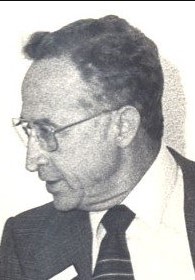
Yosef Shalhevet was born in Jerusalem in 1931. He studied at the School for Workers’ Children and a high school in Jerusalem. From 1948 to 1950, he served in the army during the War of Independence in Jerusalem, and later, as part of a Nahal core group (Garin), he was a member of Kibbutz Rosh HaNikra.
In 1951, he traveled to study agriculture in the USA. He completed his bachelor’s degree in 1954 at the University of California, Berkeley. He completed his master’s and doctoral degrees at Cornell University in Ithaca, New York. He finished his PhD in 1958 on the subject: “Corn response to nitrogen under different drainage conditions.”
In 1958, he returned to Israel and was accepted as a researcher in the Department of Soil and Water at the Agricultural Research Station in Rehovot, which later became the Agricultural Research Organization.
Research Areas Irrigation
Scientific Achievements Yosef Shalhevet’s research dealt with the irrigation of agricultural crops in general, and with marginal water in particular. His early experiments focused on irrigation with saline water at Kibbutz Tze’elim in the Negev. Yosef conducted extensive research on the drainage of fine-textured (heavy) soils. Based on the results of his work, extensive drainage work was carried out in the Jezreel Valley. His research on irrigation with saline water examined the salt tolerance of crops such as: cotton, sugar beets, peanuts, tomatoes, citrus, and avocados. They solved the influence of secondary factors such as the distribution of salinity in time and space, mixing of water sources, irrigation methods, irrigation frequency, etc., as well as the interaction between water stress and salt stress and their effect on crop response.
Contribution and Public Activity Within and Outside the Research Organization
In management roles:
-
In 1967, he was appointed Director of the Department of Soil Technology and Salinity.
-
From 1969 to 1974, he directed the Soil and Water Department/Institute.
-
From 1975 to 1979, he directed the Department of Irrigation and Environmental Physiology.
-
From 1979 to 1981, he served as Deputy Head of the Organization for Research Affairs; during part of this period, he was the Acting Head of the Organization after the elected Head, Prof. Ram Moav, fell ill.
-
From 1986 to 1990, *he was elected Head of the Agricultural Research Organization and Chief Scientist of the Ministry of Agriculture.
-
*When he was appointed to the position of Head of the Organization, the workers’ committees at the Research Organization stated: “We are glad you chose the right man for the right job at the right time.”
Membership in various committees:
-
From 1963 to 1971, he was an editorial board member of the Research Organization’s scientific journal “Ktavim”.
-
From 1976 to 1988, he was an editorial board member of the quarterly published by the International Irrigation Information Center (IIIC) and an editorial board member of the scientific journal Agricultural Water Management published by Elsevier, of which he is still a member today.
-
In 1979, he was appointed to the Committee on Water and Sea Quality on behalf of the National Council for Research and Development.
-
He co-edited and co-authored three books published by Springer-Verlag, Germany.
-
From 1987 to 1989, he was Chairman of the Board of Directors of BARD.
-
From 1981 to 1988, he was Chairman of the Board of Directors of the International Irrigation Information Center.
-
From 1990 to 1994, he represented the countries of Eastern and Southern Europe in the Consultative Group on International Agricultural Research (CGIAR).
-
From 1994 to 1997, he was a member of the BARD Advisory Committee.
-
From 1995 to 1999, he was a committee member of the US National Research Council (NRC) on Sustainable Water Supplies for the Middle East, the summary of which was published as a book.
Partner in international research:
-
In 1967, he was a member of a working group on: “Food production through irrigation with desalinated water using nuclear energy,” at the National Laboratory of the US Atomic Energy Commission in Oak Ridge, Tennessee, USA.
-
In 1971, he participated in a study on “Pollution of water sources by nitrates and pesticides,” at the Center for the Biology of Natural Systems at Washington University in St. Louis, USA.
-
He participated in aid operations in various countries on behalf of the Ministry of Foreign Affairs and international organizations, such as Romania (1969), Iran (1977), Peru and Bolivia (1977), Chile (1978), Venezuela (1980), Egypt (1982, 1986, 1988), India (1994), Sri Lanka, and Jordan (1995).
-
In the framework of international conferences and to strengthen ties with research laboratories, he visited numerous research institutions in Europe and the US. He took four sabbaticals in the US: at the University of California, Riverside and Davis, and at the University of Illinois, Urbana, in the years: 1965-1966, 1974-1975, 1983-1984, 1993-1994.
-
Prof. Shalhevet won the Ratner Prize in 1979 for an outstanding contribution to soil and water research. In 1990, he was awarded the title of “Honorary Member” by the American Society of Agronomy and the Soil Science Society of America.
-
From 1977 to 1990, he was a guest professor at the Faculty of Agriculture, where he taught a course on crop irrigation.
The First Israeli Representative in China: In 1990, Prof. Yosef Shalhevet was appointed Director of the Liaison Office of the Israel Academy of Sciences and Humanities in Beijing, China. In 1992, with the establishment of diplomatic relations between Israel and China, he was appointed Science and Agriculture Advisor at the Israeli Embassy. He also fulfilled this role for short periods in 1997 and 1999. In this context, it was written in the press that thanks to Prof. Yosef Shalhevet and the trust he built within the scientific community in China, relations were built between Israel and China on issues that extended beyond academia. It was written about Prof. Shalhevet that thanks to the “first swallow” that nested, good connections were created that contributed to diplomatic relations with Israel and the opening of the Israeli Embassy in China.
Retirement Prof. Yosef Shalhevet retired in 1996. After his retirement, he continued his activities as the Scientific Director of the Jordan Valley R&D, General Manager of the “Pri” company, and was responsible for the MASHAV course system at the China Agricultural University in Beijing. Since 2005, he has continued his activities as a volunteer in the Society of Friends and Promoters of Agricultural Research and by guiding visitors at the Agricultural Research Organization.