

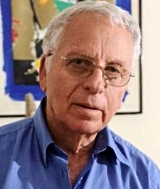
Professor Ezra Sadan is a highly distinguished economist and public figure who played a pivotal role in shaping Israel’s agricultural and economic landscape. He served as the Director of the Agricultural Research Organization (Volcani Center) from 1971 to 1975.
Here is an overview of his life and career in English:
Leadership at the Volcani Center (1971–1975)
Professor Sadan led the Volcani Center during a formative period in the early 1970s. His leadership was characterized by:
-
Economic Rigor: As an agricultural economist, he brought a data-driven approach to research management, emphasizing the economic efficiency and productivity of agricultural innovations.
-
Organizational Structuring: He worked on streamlining the administration of the research institutes to ensure that scientific output translated into national economic growth.
-
Academic Excellence: He maintained high standards for research, ensuring the Volcani Center remained a world-class institution.
National Economic Impact
Beyond his time at Volcani, Ezra Sadan is a major figure in Israel’s broader economic history:
-
Director General of the Ministry of Finance: He served in this high-ranking role during the early 1980s, a period of significant economic challenges for Israel. He was a central architect of fiscal policy during these turbulent years.
-
Academic Career: A long-time Professor at the Hebrew University’s Faculty of Agriculture in Rehovot, he specialized in agricultural economics and influenced generations of students and policymakers.
-
Israel Prize: In 2006, he was awarded the Israel Prize in Agricultural Research and Environmental Science for his immense contribution to the field.
Legacy
Professor Sadan is often viewed as the “intellectual powerhouse” of Israeli agriculture. He didn’t just look at how to grow better crops; he looked at how agriculture functioned as an entire economic system. His work provided the theoretical and practical framework that allowed Israeli farming to become the highly efficient, export-oriented industry it is today.
In the history of the Volcani Center, he is remembered as a director who bridged the gap between complex science and national economic strategy.