

Congratulations to our Researchres, here are the projects:
Dr. Samuel Bocobza:
Our research focuses on developing the methodology of gene editing in potatoes without introducing transgenes into the potato genome. We aim to create novel potato varieties with improved agricultural traits.
Dr. Itay Maoz:
Our research focuses on studying wheat’s defense response mediated by volatile terpenes. By understanding which genes underlie the natural defense response, we aim to develop more resistant wheat varieties and discover new plant-based pesticides for sustainable agriculture.
Dr. Simon Michaeli:
Utilizing banana fruit stomata response to ethylene for fruit shelf-life extension.
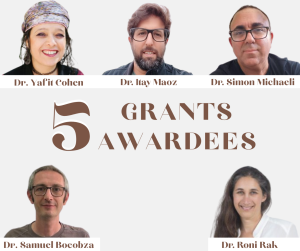
Dr. Roni Rak:
This collaborative research aims to revolutionize the cultivated meat field and resolve one of the primary barriers hindering scalable and cost-effective production: the slow growth rate of cells. Within the project, the researchers employ advanced genetic editing technology (CRISPR) to scan the bovine genome and identify genetic “switches” that will enable stem cells to proliferate rapidly and differentiate efficiently into muscle and fat tissues.
The project represents a first-of-its-kind breakthrough by utilizing broad CRISPR screening to enhance the performance of embryonic cells specifically for the food industry. This unique collaboration connects the laboratory of Dr. Roni Rak (Volcani Institute), contributing technological expertise in genetic screening, with the laboratory of Dr. Sharon Schlesinger (Hebrew University), which has developed unique methods for culturing bovine embryonic stem cells, all with the goal of creating an improved biological foundation for future sustainable food production.
Dr. Yafit Cohen:
Climate- and Landscape-Informed Forecasting of Mediterranean Fruit Fly Hotspots for Sustainable Area-Wide Pest Management
The proposed study aims to develop a high spatiotemporal resolution forecasting system for the early detection of risk hotspots for Mediterranean fruit fly outbreaks in orchards, by integrating forecasts of meteorological conditions, population-dynamics models, and landscape characteristics. The system will serve as a basis for informed decision-making and spatially targeted, timely pest control, with the goal of reducing pesticide use while improving the efficiency and sustainability of the pest management.