The Challenge: The Pomegranate global market under climate change challenges Warmer winters affect flowering and fruit quality Global markets demand premium fruit quality at different fruit ripening times Growers need early and late cultivars for higher profitability and marketing flexibility.
The Solutions: Pomegranate Breeding Strategy and Achievements Genetic markers are used to track traits like fruit color and dormancy initiation. The program targets the ripening schedule and adaptation to warm climates. Thousands of crosses were performed, and hundreds of elite clones were evaluated. The resulting top-performing pomegranate cultivars—characterized by high yields and early to late ripening (from early August to mid-October)—enable extension of the harvest season and access to premium markets.
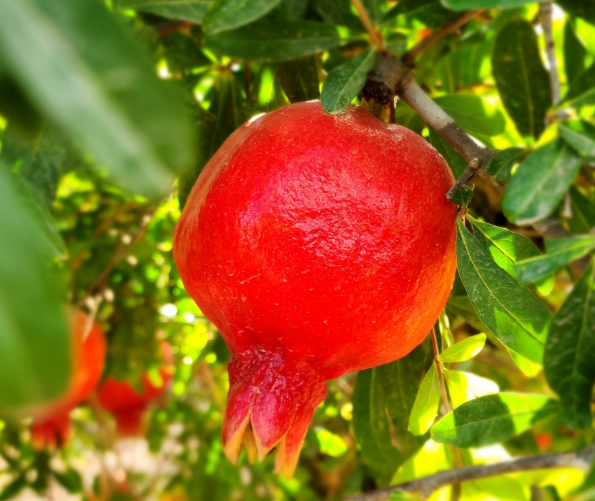
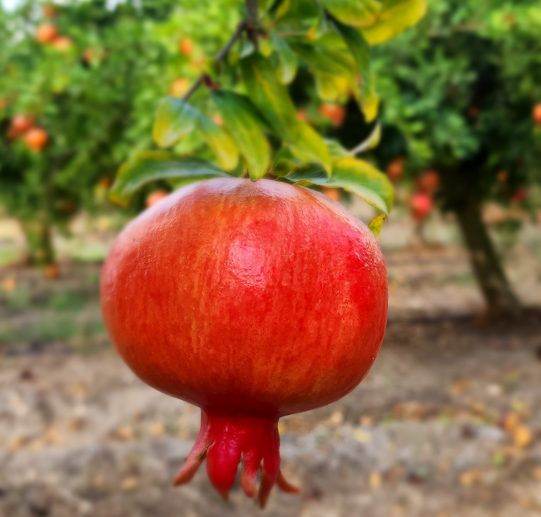
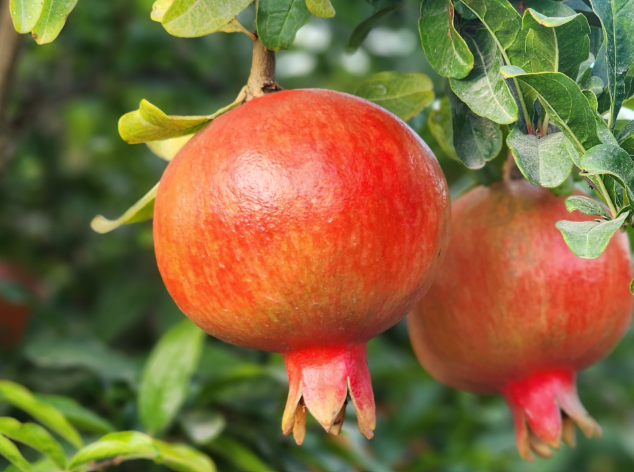
Result: New Pomegranate Cultivars, with exceptional fruit quality, and extended Harvest Windows: Early and Late Varieties, Tailored for Agriculture Under Climate-Change Challenges and Global Market Competitiveness. Three elite cultivars were selected and commercialized: ‘Emek’, ‘Shani-Yonai’, and ‘Neta-NY’-now widely grown in Israel. New Pomegranate Cultivars