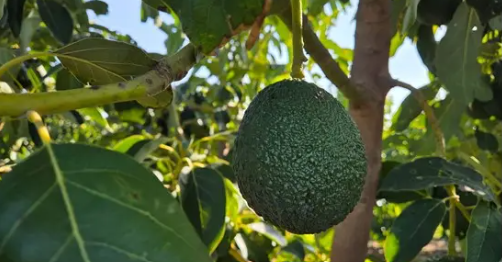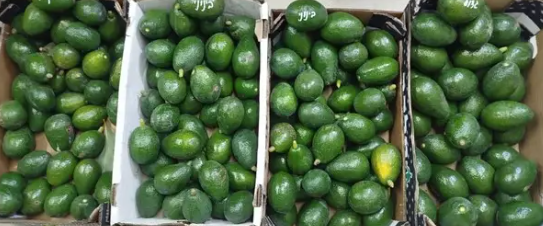


The area currently planted with avocado in Israel is approximately 150,000 dunams. Despite the generally favorable status of avocado production in the country, the main commercial cultivars grown in Israel have several limitations. The ‘Hass’ cultivar is the most demanded variety in global markets and is characterized by a long harvesting season, extended shelf life, good flavor, and a black skin color at ripening that matches market preferences, however this poplar cultivar is also prone to alternate bearing. The ‘Ettinger’ cultivar, which was selected locally and became commercial in Israel, is a green-skinned variety characterized by large, attractive fruit and higher and more stable yields than ‘Hass’. However, its market value in export markets is lower than that of ‘Hass’ and in recent years, the planting area of ‘Ettinger’ has declined, and it is now mainly planted as a pollinizer (flowering type B).
The current composition of avocado cultivars in Israel constitutes a bottleneck for the industry, which can be overcome through breeding and selection of new cultivars aimed at increasing and stabilizing yields and providing the market with unique, high-quality Israeli fruit. Between 2009 and 2019, we conducted a classical breeding program aimed at developing improved avocado cultivars through selection. This program was a continuation of an earlier breeding effort conducted at the Volcani Center in the previous decade. During the program, we identified 26 promising genotypes with potential to become new cultivars. These genotypes were grafted in experimental plots at the Akko research farm and in model orchards at several sites across the country, and are currently at advanced stages of further evaluation, including the collection of postharvest storage data, assessment of alternate bearing data, and tolerance to various stress conditions. Recently, fruit tree breeding objectives have increasingly emphasized adaptation to growing regions and changing climatic trends. In avocado, a specific need has been defined for the selection and development of productive ‘Hass’-like genotypes. Accordingly, in the current follow-up breeding program, we focus on:
(a) continued selection of early- or late-season ‘Hass’-like cultivars that retain its advantages while exhibiting stable and high productivity;
(b) selection of ‘Hass’-like cultivars with flowering type B, characterized by high fruit quality and potential to replace ‘Ettinger’ as pollinizers;
(c) selection of ‘Hass’-like cultivars adapted to the specific climatic conditions of the eastern valleys and the northern and western Negev regions;
(d) development of molecular markers for traits such as skin color and flowering type, enabling early-stage selection at the seedling level.
The development of such tools will provide supportive breeding resources that allow early screening for key traits, increase the scale of selection within the breeding program, and reduce the land area required for field evaluation.